Soviet Army
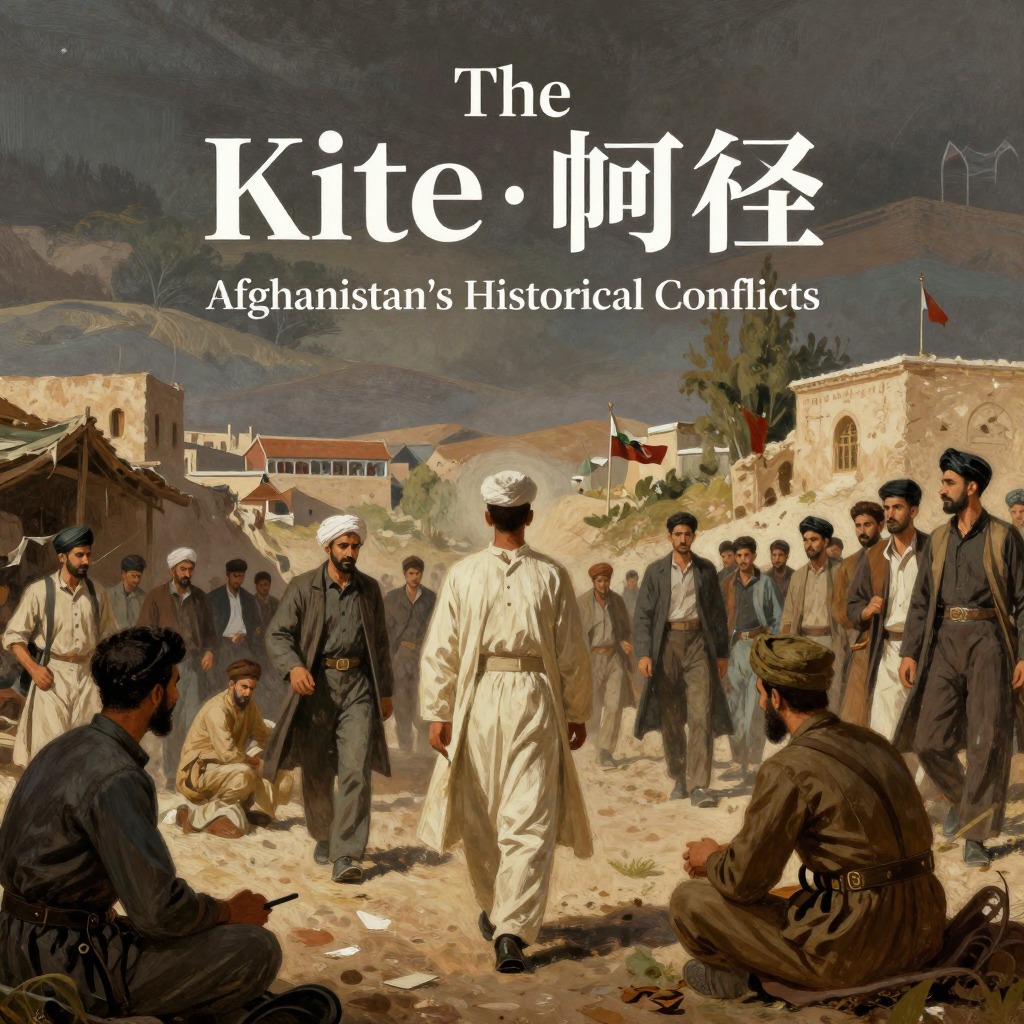
The Soviet Army, referred to by Afghans as the "Shorawi," enters the narrative not as a distant geopolitical force but as the concrete instrument that destroys the life Amir and Baba knew in Kabul. Its invasion in December 1979, following a communist coup in April 1978, is the event that makes their flight from Afghanistan necessary, turning the country into a place of checkpoints, curfews, and summary violence. The Soviet occupation is the historical pivot that separates Amir's childhood from his exile, and its legacy of war and chaos creates the conditions for the Taliban's later rise and the deaths of Hassan and Farzana.
Invasion and Occupation
The Soviet Army's arrival is the culmination of a process that began with the bloodless coup of July 17, 1973, when Daoud Khan overthrew the monarchy. That night, the sounds of gunfire and explosions were foreign to the children of Kabul, but the narrator notes that "the generation of Afghan children whose ears would know nothing but the sounds of bombs and gunfire was not yet born." The "official end" of the old Afghanistan came first with the communist coup in April 1978, and then "in December 1979, when Russian tanks would roll into the very same streets where Hassan and I played, bringing the death of the Afghanistan I knew and marking the start of a still ongoing era of bloodletting." The occupation fundamentally alters daily life. By March 1981, when Baba and Amir flee, Kabul is a city under siege: grim-faced Russian soldiers patrol the sidewalks, tanks roll up and down the streets with turrets "swiveling like accusing fingers," and Russian Army Personnel Carriers weave through the bazaars. The city is filled with rubble and a pervasive atmosphere of fear, where the "rafiqs," or comrades, are everywhere, splitting Kabul into those who eavesdrop and those who do not. A casual remark to a tailor or a complaint to a butcher can land a person in the dungeons of Poleh-Charkhi, and children are taught to spy on their parents.
The Escape and the Checkpoint
The Soviet occupation directly shapes the harrowing escape of Baba and Amir. They flee Kabul in a tarpaulin-covered truck driven by a people smuggler named Karim, a journey that takes them through a checkpoint at Mahipar. There, a drunken, grinning Russian soldier, described as having a face like a bulldog's, demands a half-hour with a young woman passenger as his "price for letting us pass." When Baba stands up to him, declaring that "war doesn't negate decency. It demands it, even more than in times of peace," the soldier draws his gun. Only the intervention of a second, older Russian officer prevents Baba from being shot. The officer apologizes, explaining that Russia sends young men to fight who find "the pleasure of drug" and become attached to it. This incident encapsulates the Soviet Army's role in the novel: a brutal, dehumanizing force that corrupts both its own soldiers and the society it occupies, while also providing the crucible in which Baba's courage is tested and Amir's fear is confirmed.
Legacy and Aftermath
The Soviet withdrawal in 1989 does not bring peace. Instead, the war rages on between Afghans, the Mujahedin, against the Soviet puppet government of Najibullah. The narrator notes that it should have been a time of glory, but instead, Afghan refugees kept flocking to Pakistan. The decade of Soviet occupation and the subsequent civil war it engendered left Kabul in ruins. When Amir returns in 2001, he sees the grim reminders of the first war strewn along the road from Jalalabad to Kabul: "burned carcasses of old Soviet tanks, overturned military trucks gone to rust, a crushed Russian jeep that had plunged over the mountainside." The Soviet Army's invasion is the original sin that sets in motion the cycle of violence, displacement, and loss that defines the lives of Amir, Hassan, and Sohrab, making the Soviet Army a silent but ever-present antagonist whose shadow extends long after its tanks have left.